
Protein-Rich Diet
The Most Underused Macronutrient, and Why We Need More of It
Abstract
Protein is the macronutrient most adults in this country under-eat, and most of the consequences show up decades later in life with slower recovery from injury, loss of strength with age, increased fall risk and the slow leak of independence that gets attributed to "getting older." Current evidence is pushing me to recommend more protein in the diet than before. I recommend 1.5 to 2.2 grams of protein per kilogram (0.7 to 1.0 grams per pound) of ideal body weight per day for most healthy adults, >2.2 g/kg (>1.0 grams per pound) for adults over 65, and >2.2 g/kg (1.0 grams per pound) for active adults and athletes. Animal sources are the practical default and a far easier path than plant-based proteins which require extensive planning and creativity.1,2,3,4,5,6,7,8,10 A protein-rich diet built from real food, spread across three to four meals a day with 30 to 50 grams of high-quality protein per meal, is the foundation. Supplements exist to fill gaps but not to replace real food.
Introduction
Watch TV, scroll social media or walk through any grocery store and you will see the resurgence protein is having. Whether it is protein-enriched cereals, protein waters or protein powders these are taking the country by storm. There is a steady drumbeat from podcasts and longevity experts telling you to eat more of it. The U.S. protein supplement market alone now measures in the billions, and protein recommendations in the scientific literature have quietly drifted upward over the past twenty years.4,13
While many trends are hype without substance, the promotion of a protein rich data is backed by the data. Protein is the most under-consumed macronutrient in the typical American diet, and the consequences show up in my clinic daily. Slower recovery from injury, loss of lean body mass, loss of strength and metabolic syndrome.1,2,3
While this is an important aspect to emphasize, compared to some other adjustments we should make for our health, most patients do not need dramatic changes to their lifestyle in order to get this part of their health on track. Many of us are getting protein but only the bare necessities which is far below the optimal amount.
This article walks through what protein actually is, why it matters, how much you really need, why animal sources are best, and what the current evidence says about safety and special situations like older age and intense training. The idea is to be practical and by the end of this article you should know your own number, know how to hit it, and what this is doing for you.
What Protein Is
Protein is one of three macronutrients in food, alongside carbohydrates and fat. Unlike those two, protein is built from nitrogen-containing building blocks called amino acids. There are twenty standard amino acids, nine of which are considered essential, meaning the body cannot make them on its own and must get them from food.4
When we eat protein, your digestive system breaks most of these down into those amino acid building blocks, which then are absorbed through the intestinal lining and circulate in the blood. These are then absorbed by tissues throughout to utilize in various ways. If we are energy deficient, they may be converted to energy. If we have enough energy, cells across the body will absorb amino acids to build new things and repair existing structures. When amino acids arrive at muscle, especially when paired with resistance training, this stimulates the muscle protein synthesis which is the building block of new muscle tissue. Skeletal muscle is the largest reservoir of protein in our body. If we do not get enough in our diet, our body can leach protein from the muscle for whatever needs it has elsewhere. While the largest amount of protein is in skeletal muscle it is also found in just about every tissue throughout the body including in skin, hair, nails, bone, immune cells, hormones, enzymes, and the lining of the gut.4,12
The nine essential amino acids that we must get from our diet are the reason protein quality matters, not just quantity. A food can be high in protein but still be a poor source if it is missing or low in these essential amino acids. Animal sources including meat, fish, poultry, eggs and dairy tend to provide all nine in approximately the proportions the body needs making them complete proteins. Plant sources are almost always considered incomplete meaning they have a deficiency in one or multiple of these nine amino acids. Because most plant foods have little amounts of at least one essential amino acid, simply eating more of a plant source does not work the same way as eating more eggs or chicken and may still leave you deficient.6,7 Smart combinations of plant foods such as rice and beans, hummus and whole-wheat pita, soy and quinoa can deliver a complete amino acid profile from plant-only sources, but it takes more planning and larger portions that generally come packaged with extra unwanted carbohydrates and fats.6,7 any try to get protein from plant sources using ultraprocessed foods like protein powders and supplements, but these go through processing which is far from ideal.
Leucine is one of these essential amino acids that is worth calling out specifically because it acts as the master switch for muscle protein synthesis which is the body's process of building new muscle. A meal needs roughly 2.5 to 3 grams of leucine to maximally trigger that switch in young adults. Animal proteins are dense in leucine while most plant proteins are not, which is why prioritizing these animal sources is very important.4,6
Why Protein Matters for Health
While the science sounds promising for ingesting more protein, what most people care about is how will this change my health today and in the future. Athletes want to know how this will change my performance. Here are some tangible ways a healthy amount of protein in your diet can have an impact.
Muscle health, strength and physical function. Skeletal muscle is not just for athletes, it is important for everyone. A measurement of someone's muscle mass and strength is one of the best predictors of healthspan, how many healthy years someone will live. It is the metabolic organ that regulates blood sugar, supports immune function, protects joints, and keeps people independent as they age. Loss of muscle, termed sarcopenia, is one of the strongest predictors of falls, fractures, hospitalization, poor metabolic health and loss of independence in older adults. Higher protein intake is consistently associated with greater lean mass, better strength, and slower age-related decline.1,2,3
Recovery from injury and surgery. Our body is built of protein. More building blocks means better recovery. Tendons, ligaments, bone, muscle and essentially all tissues require amino acids to heal. Under-fueling protein slows recovery, raises complication risk after surgery, and prolongs return-to-play after musculoskeletal injury.3,4
Body composition and weight management. Protein is the most satiating macronutrient per calorie. Higher-protein diets tend to reduce hunger, preserve lean mass during weight loss, and improve body composition at the same body weight.3,4,5 A diet filled with protein is one that has less room for troublesome carbohydrates that normally have larger impacts on our metabolic health.
Immune function and gut health. Antibodies, immune cells, and the gut lining all turn over rapidly and depend on steady amino acid supply. Protein deficiency impairs wound healing, infection resistance, and gut barrier integrity.4
Aging well. This one is commonly missed. Most of what we call "aging poorly" including fatigue, falls, fractures, slow recovery, weight gain around the middle and loss of strength is commonly related to sarcopenia, bodies that are undermuscled. This lack of healthy muscle mass and function will lead to an impaired ability to meet the metabolic and physical demands of life. Preserving muscle preserves function. Preserving function preserves independence. Adequate protein across the lifespan is one of the most evidence-supported tools we have for the second half of life.1,2,3
How Much Protein Do You Need
That the answer depends on your age, your training, your body composition goals, and your overall health.
General healthy adults. A reasonable working range is 1.5 to 2.2 grams of protein per kilogram (0.7 to 1.0 grams per pound) of ideal body weight per day.3,4
Active adults and older adults (65 and over). Aim higher trying to get above the 2.2 grams per kilogram (1.0 grams per pound) of ideal body weight per day. Being on the upper end of that range for the general population if you are trying to stimulate muscle protein synthesis, get better gains from strength-training or recovering from injury more protein is better.2
It is important to acknowledge this is a difficult goal and may not always be achieved, but shooting for protein making up a larger percentage of our diet can improve muscle health and crowd out those pesky carbohydrates and ultraprocessed foods.
Where the floor is. The traditional RDA (recommended daily allowance) of 0.8 grams per kilogram is a deficiency-prevention floor set by the Institute of Medicine and echoed in federal dietary guidance, and it is broadly consistent with the European Food Safety Authority's Population Reference Intake of 0.83 grams per kilogram.14,16 It is enough to keep a sedentary adult in nitrogen balance, but it is not the target that current research supports for muscle health, recovery or healthy aging.1,2,3
The ceiling, for healthy adults with normal kidney function, is much higher than the floor. While most patients will have no problem with high protein diets, those with established chronic kidney disease and other chronic medical concerns need individualized guidance from their physician.
Building a Protein-Rich Plate
Total daily protein matters, but so does how it is spread across the day. The reason is that muscle protein synthesis responds to the leucine content of each meal, not to the average across 24 hours. A 100-gram day concentrated at dinner does not build muscle the same way as a 100-gram day spread across breakfast, lunch, dinner, and a snack.5,9,10
Per-meal targets. Most adults do well with 30 to 40 grams of high-quality protein per meal, three to four times per day. That target delivers roughly 2.5 to 3 grams of leucine per meal, which is the threshold at which muscle protein synthesis is maximally triggered in young adults and reasonably triggered in older adults.5,9
Why breakfast matters. The typical American breakfast is carbohydrate-heavy and protein-poor (cereal, toast, pastries), and that pattern underserves muscle across the entire day. Studies in older adults have shown that people who consume two or more meals per day with at least 30 grams of protein each have measurably greater leg lean mass and knee-extensor strength than people whose protein is concentrated into a single meal.10 A higher-protein breakfast, for example, eggs, Greek yogurt, or a protein-fortified smoothie, sets the tone for the rest of the day.12
Protein powders as a tool, not a religion. A serving of whey or a high-quality plant blend is a convenient way to hit per-meal targets when whole food is impractical, and whey in particular has the best-studied recovery benefit of any protein source.17 They are not magical; they are simply a food, in powdered form. For most patients I would rather see them get there with real food and use powders only to fill gaps.
Animal Sources: Why They Are the Practical Default
Patients often ask whether animal protein is necessary. Technically the answer is no. A thoughtfully built plant-only diet can meet protein needs, but this is very difficult and typically requires some processed proteins. Planning is required to put complimentary proteins together in order to get every essential amino acid. In a real practical sense, for most people the answer is yes, that we do need animal sources of protein. Animal sources are far more efficient and complete. These proteins are not packaged with extra unwanted carbohydrates and fats or have not gone through significant processing to arrive at that state.
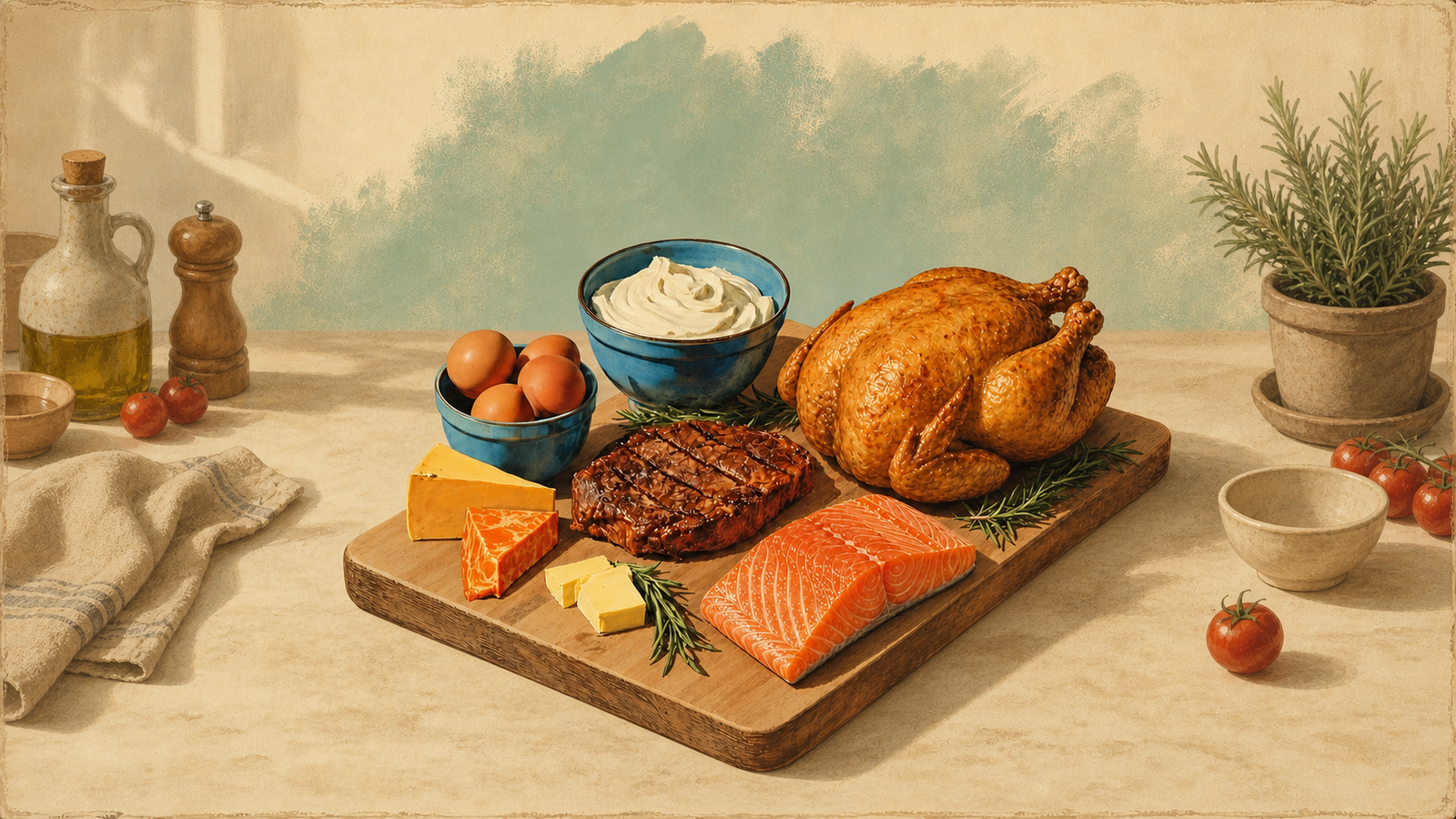
Why animal sources are more efficient. Animal proteins are generally complete (all nine essential amino acids in good proportions), high in leucine, and highly digestible. A 4-ounce serving of chicken, a cup of Greek yogurt, three eggs, or a 4-ounce piece of salmon each deliver 20 to 30 grams of complete protein that the body can digest and absorb readily.
- Eggs. The benchmark food. Complete protein, high leucine, ~6 g per large egg, inexpensive, and flexible enough to anchor any meal.
- Greek yogurt and cottage cheese. High-protein dairy, ~15-25 g per single-serve container. Cottage cheese in particular is underused.
- Canned/packaged fish. Tuna, salmon, sardines. Inexpensive, shelf-stable, and an easy way to add protein to a meal in 30 seconds.
- Chicken and turkey breast. The backbone of most patients' lunch. Lean, complete, predictable.
- Lean beef and pork loin. Underrated because of cultural messaging. Complete, bioavailable, similar protein density to chicken.
- Fish and shellfish. Salmon, cod, shrimp, scallops, mussels. Slightly lower protein-per-ounce than poultry but with the bonus of omega-3s and other micronutrients.
We of course want to source these animal based proteins from healthy places. You can find these at local supermarkets, but you must be intentional as many of these may be from animals that have had less than ideal feed, been under stress, received medications and other less than ideal aspects. Getting meat, dairy and animal proteins from local farms using regenerative, organic and otherwise healthy practices is important.
If you are looking for this type of meat with the convenience of delivery, consider Porter Road.

Pasture-raised meats, delivered. See the full Porter Road recommendation.
Plant Sources: How to Make Them Count
A well-planned plant-forward diet can meet protein needs. The word is "planned." Whole-food plant proteins require more attention to combinations and portions than animal proteins do.
Why plant sources require more effort. Most plant proteins are lower in one or more essential amino acids. Grains tend to be low in lysine and many beans and legumes are low in methionine. Most have lower digestibility due to fiber and plant compounds.6,7 A cup of cooked lentils has roughly 18 grams of protein on the label, but the amount the body can actually use for muscle building is meaningfully lower than the equivalent grams from chicken or eggs. To match the anabolic effect of 25 grams of whey, you typically need 35 to 50 grams of plant protein, and that is achievable only when you are thoughtful about combining sources across the day.6,7
Recent work has shown that a well-designed plant blend (for example, a combination of wheat, corn, and pea protein) can stimulate muscle protein synthesis to a similar degree as milk protein when matched gram-for-gram at 30 grams per dose.8 While conceptually that is helpful, it is also a controlled laboratory study in young men, not a realistic description of a typical real world meal.
The carbohydrate trade-off. Whole-food plant protein sources are almost always bundled with significant carbohydrate. A cup of cooked lentils delivers roughly 18 grams of protein alongside about 40 grams of carbohydrate. Black beans, chickpeas and quinoa all have high carbohydrate content as well.17 Carbohydrates in adequate amounts and from healthy sources can be tolerated, but for metabolic health, trying to keep carbohydrate load is important. Hitting protein targets with whole plants means taking on substantial carbohydrate alongside the protein. For patients looking for unprocessed or minimally processed, high-quality protein, animal sources are the practical default.
Practical combinations that work. For patients eating plant-based, the most reliable strategies are combining grains and legumes in the same day (rice and beans, hummus and pita, tofu with brown rice) and lean into soy products which are the highest-quality common plant protein. If you are able to take in animal products but not meat, include dairy and eggs where you are able to.6,7
- Soy products. Tofu, tempeh, edamame, soy milk. The single highest-quality common plant protein.
- Lentils. Highest-protein legume by volume, easy to cook in batches.
- Black beans and chickpeas. Backbone of plant-based diets but should be paired with a grain.
- Quinoa. Highest-protein whole grain, and one of the few plant foods with a complete amino acid profile.
- Peanuts, peanut butter, almonds. Higher protein-per-calorie than most nuts; useful for snacks.
Distribution: The Per-Meal Dose
Total daily protein matters, but so does how it is spread across the day. The reason is that muscle protein synthesis responds to the leucine content of each meal, not to the average across 24 hours. A 100-gram day concentrated at dinner does not build muscle the same way as a 100-gram day spread across breakfast, lunch, dinner, and a snack.5,6,10
Per-meal targets. Most adults do well with 25 to 50 grams of high-quality protein per meal, three to four times per day. That target delivers roughly 2.5 to 3 grams of leucine per meal, which is the threshold at which muscle protein synthesis is maximally triggered in young adults and reasonably triggered in older adults.5,6
Why breakfast matters. The typical American breakfast is carbohydrate-heavy and protein-poor, and that pattern underserves muscle across the entire day. Studies in older adults have shown that people who consume two or more meals per day with at least 30 grams of protein each have measurably greater leg lean mass and knee-extensor strength than people whose protein is concentrated into a single meal.10 A higher-protein breakfast — eggs, Greek yogurt, cottage cheese, smoked salmon, a protein-fortified smoothie — sets the tone for the rest of the day.11
A Note on Supplements
For most patients, a protein-rich diet built from real food will hit the target. But two gaps come up often enough in clinic to mention directly.
When supplements help. A protein powder or ready-to-drink shake is a convenient, shelf-stable way to fill a per-meal gap. Typically when whole-food portions do not work for your schedule (early-morning departures, long travel, post-workout, workdays without a fridge). For most patients I would rather see them get there with real food and use powders only to fill gaps as needed, but for some these are necessary.
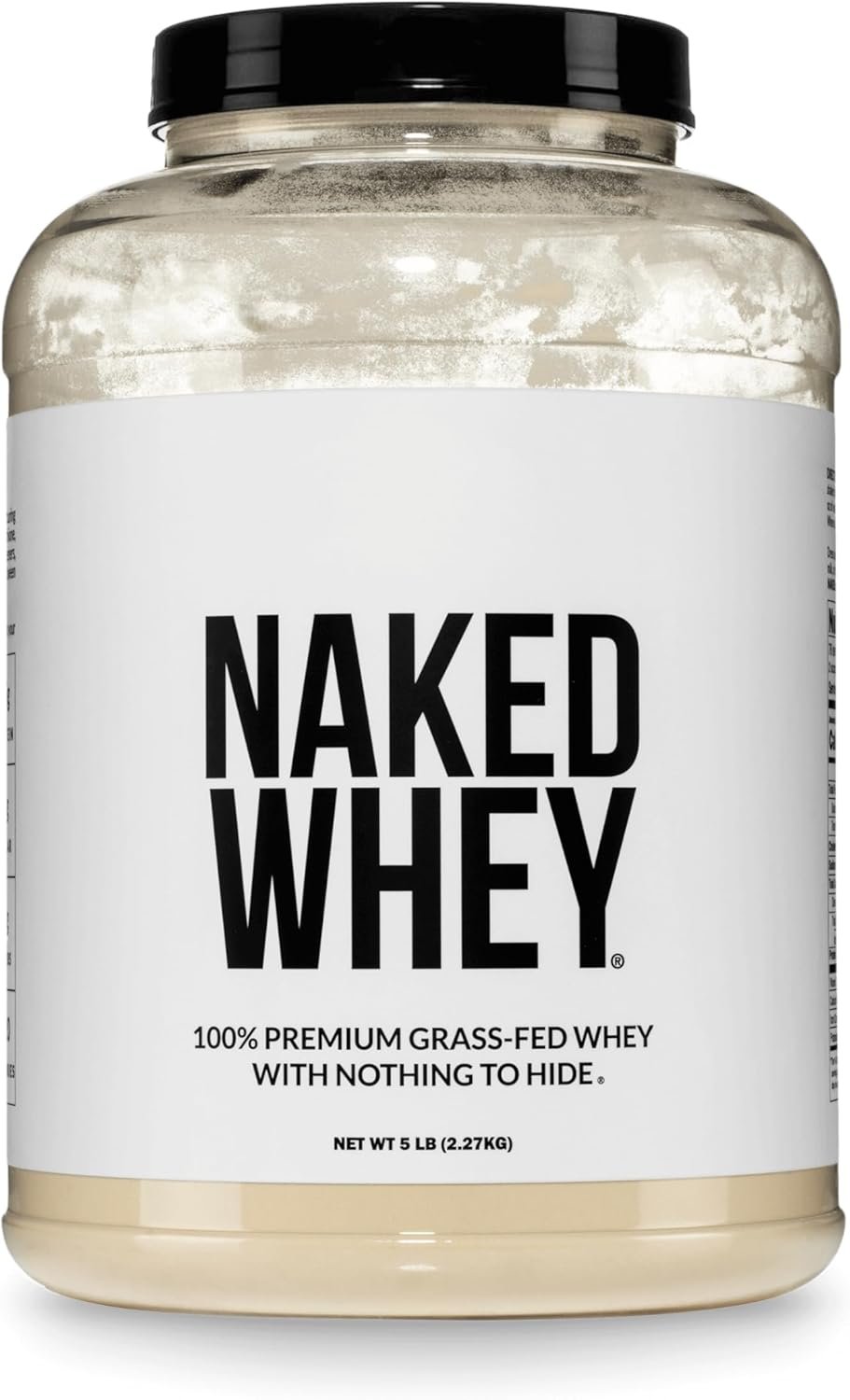
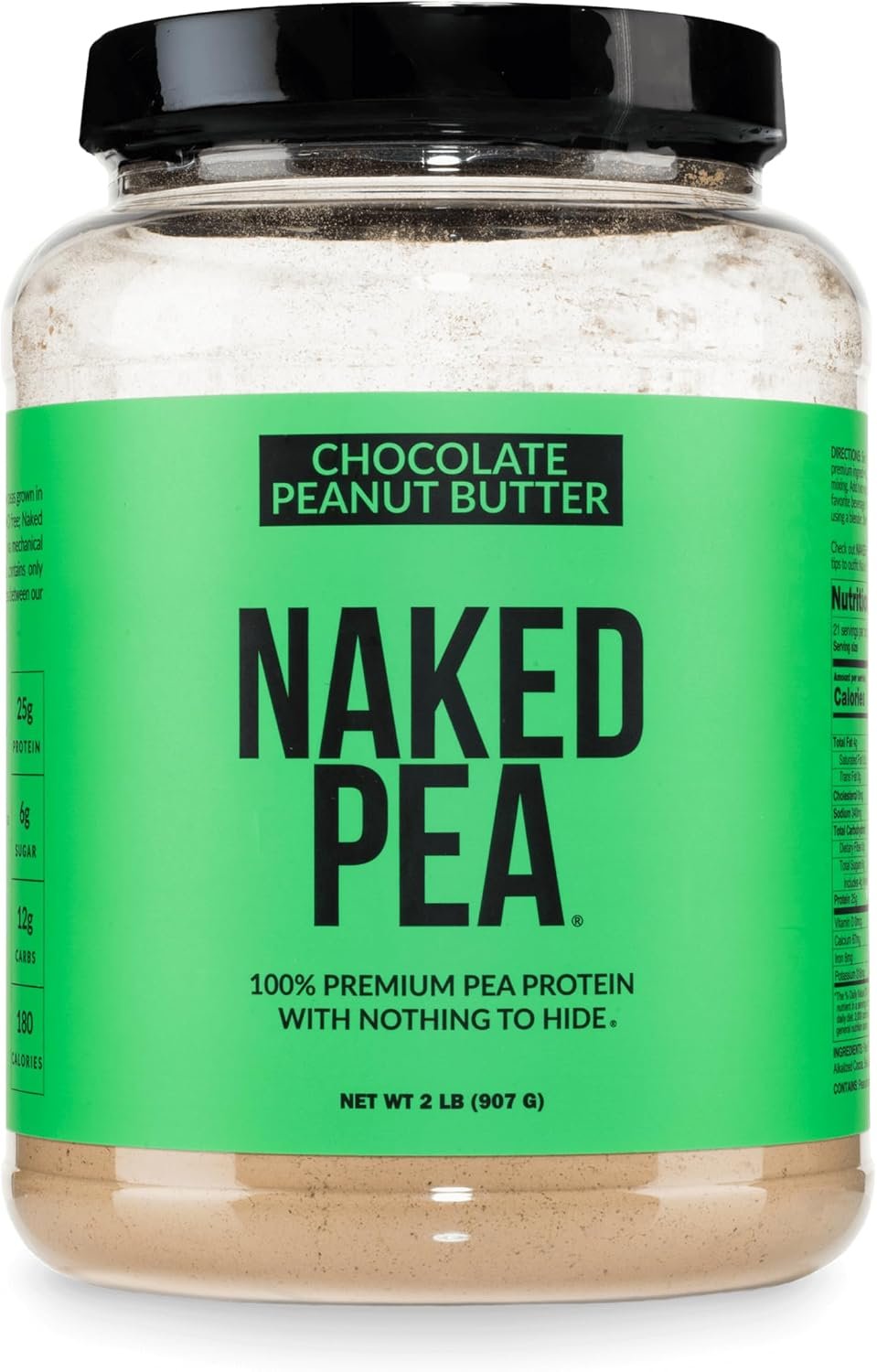
In regards to protein powder, Naked Whey is the brand I recommend. Naked, gets its name from the fact it has one single ingredient — no flavors, sweeteners, fillers or preservatives. Naked Pea is their plant-based counterpart, made of pea protein and is equally clean. While of course these are still processed, keeping ingredients simple and minimal is important. Both products can be found in the Recommendations section of our website by clicking the hyperlinks for these products or the images below.
Is More Always Better? Safety and Limits
For healthy adults, higher protein intake, up to about 3 grams per kilogram per day, which is well above what most people consume, appears safe for kidney function in the short to medium term.9 The two concerns that come up most often in clinic are worth addressing directly.
Kidney health. The persistent belief that high protein intake "damages the kidneys" is not supported by current evidence in people with normal kidney function. Protein does increase filtration rate, which is a normal adaptive response, not damage.9 Patients with established chronic kidney disease need a direct conversation with their physician.
Bone health. Higher protein intake has historically been accused of leaching calcium from bone, but the current evidence points the other way. When calcium intake is adequate, higher protein intake is associated with better bone density, especially in older adults.12 Adequate calcium and adequate protein work together.
Common Questions
Will eating more protein make me bulky? No. Building visible muscle requires resistance training, a calorie surplus, and consistency over months. Adding protein to a sedentary routine will not produce bulk. It will tend to reduce hunger and modestly improve body composition.
Can I get enough protein on a plant-based diet? Yes, with planning. Target the upper end of the per-kilogram range, lean on soy, combine grains and legumes across the day, and use a plant protein powder to fill gaps when whole-food portions are impractical.
Do older adults really need that much protein? Yes. The combination of age-related anabolic resistance, accelerated muscle loss, and longer recovery from illness makes the upper end of the protein range (>2.2 g/kg/day) particularly important after 65 years of age.1,2
Should I count protein grams or just eat intuitively? Counting grams for a few weeks is the fastest way to learn what portions actually deliver the protein you think they do. Most people discover they are overestimating protein at breakfast and underestimating it at dinner.
Conclusion
If there is a single nutritional message I would want every patient to walk away with, it is that protein is the most important macronutrient you are probably not eating enough of and the way to fix this is from a plate, not from a tub.
The evidence is growing and I recommend 1.6 to 2.2 grams per kilogram per day (0.7 to 1.0 grams per pound) for most adults and >2.2 grams per kilogram per day (>1.0 gram per pound) for athletes and adults over 65 years of age.2,3,4,5 Animal sources are not technically required, but they are by far more practical and efficient to hit those targets. Plant-based diets work when they are planned around particular combinations. Spread protein across three to four meals a day, with 25 to 50 grams of high-quality protein at each, and pair it with regular resistance training, adequate sleep, and healthy lifestyle.5,6,10
Supplements exist to fill gaps a food-first diet leaves behind, not to replace the diet. For the deeper walk-through of powders, blends, collagen, and how to read a label, see the companion article Protein Supplementation in The Medications and Supplements section. These will not replace real food, real movement, and a real priority on your health but certainly will move you in a healthier direction. For patients who care about health, longevity and performance, getting protein right is one of the highest-yield changes you can make.
Recommended Products
References
- Houston DK, Nicklas BJ, Ding J, et al. Dietary protein intake is associated with lean mass change in older, community-dwelling adults: the Health, Aging, and Body Composition (Health ABC) Study. Am J Clin Nutr. 2008;871:150-155. PMID 18175749.
- Bauer J, Biolo G, Cederholm T, et al. (PROT-AGE Study Group). Evidence-based recommendations for optimal dietary protein intake in older people. J Am Med Dir Assoc. 2013;148:542-559. PMID 23867520.
- Morton RW, Murphy KT, McKellar SR, et al. A systematic review, meta-analysis and meta-regression of the effect of protein supplementation on resistance training-induced gains in muscle mass and strength in healthy adults. Br J Sports Med. 2018;526:376-384. PMID 28698222.
- Jäger R, Kerksick CM, Campbell BI, et al. International Society of Sports Nutrition Position Stand: protein and exercise. J Int Soc Sports Nutr. 2017;14:20. PMID 28642676.
- Schoenfeld BJ, Aragon AA. How much protein can the body use in a single meal for muscle-building? Implications for daily protein distribution. J Int Soc Sports Nutr. 2018;15:10. PMID 29497353.
- van Vliet S, Burd NA, van Loon LJ. The Skeletal Muscle Anabolic Response to Plant- versus Animal-Based Protein Consumption. J Nutr. 2015;1459:1981-1991. PMID 26224750.
- Tang JE, Phillips SM. Maximizing muscle protein anabolism: the role of protein quality. Curr Opin Clin Nutr Metab Care. 2009;121:66-71. PMID 19057190.
- Pinckaers PJM, Kouw IWK, Hendriks FK, et al. The Muscle Protein Synthetic Response to the Ingestion of a Plant-Derived Protein Blend Does Not Differ from an Equivalent Amount of Milk Protein in Healthy Young Males. J Nutr. 2023;15212:2734-2743. PMID 36170964.
- Juraschek SP, Appel LJ, Anderson CAM, Miller ER 3rd. Effect of a high-protein diet on kidney function in healthy adults: results from the OmniHeart trial. Am J Kidney Dis. 2013;614:547-554. PMID 23219108.
- Loenneke JP, Loprinzi PD, Murphy CA, Phillips SM. Per meal dose and frequency of protein consumption is associated with lean mass and muscle performance. Clin Nutr. 2016;356:1506-1511. PMID 27086196.
- Leidy HJ, Hoertel HA, Douglas SM, et al. A high-protein breakfast prevents body fat gain, through reductions in daily intake and hunger, in "Breakfast skipping" adolescents. Obesity (Silver Spring). 2015;239:1761-1764. PMID 26239831.
- Heaney RP. Amount and type of protein influences bone health. Am J Clin Nutr. 2008;875:1567S-1570S. PMID 18469289.
- U.S. Department of Agriculture and U.S. Department of Health and Human Services. Dietary Guidelines for Americans, 2020-2025. 9th edition. December 2020.
- Chen Z, Glisic M, Song M, et al. Dietary protein intake and all-cause and cause-specific mortality: results from the Rotterdam Study and a meta-analysis of prospective cohort studies. Eur J Epidemiol. 2020;355:411-429. PMID 32076944.
- Trumbo P, Schlicker S, Yates AA, Poos M; Food and Nutrition Board, Institute of Medicine. Dietary Reference Intakes for Energy, Carbohydrate, Fiber, Fat, Fatty Acids, Cholesterol, Protein, and Amino Acids. J Am Diet Assoc. 2002;10211:1621-1630. (Source of the 0.8 g/kg RDA.)
- European Food Safety Authority Panel on Dietetic Products, Nutrition and Allergies. Scientific Opinion on Dietary Reference Values for protein. EFSA Journal. 2012;102:2557.
- U.S. Department of Agriculture, Agricultural Research Service. FoodData Central. fdc.nal.usda.gov. Accessed 2026.
Share
Send this article to someone who would find it useful.