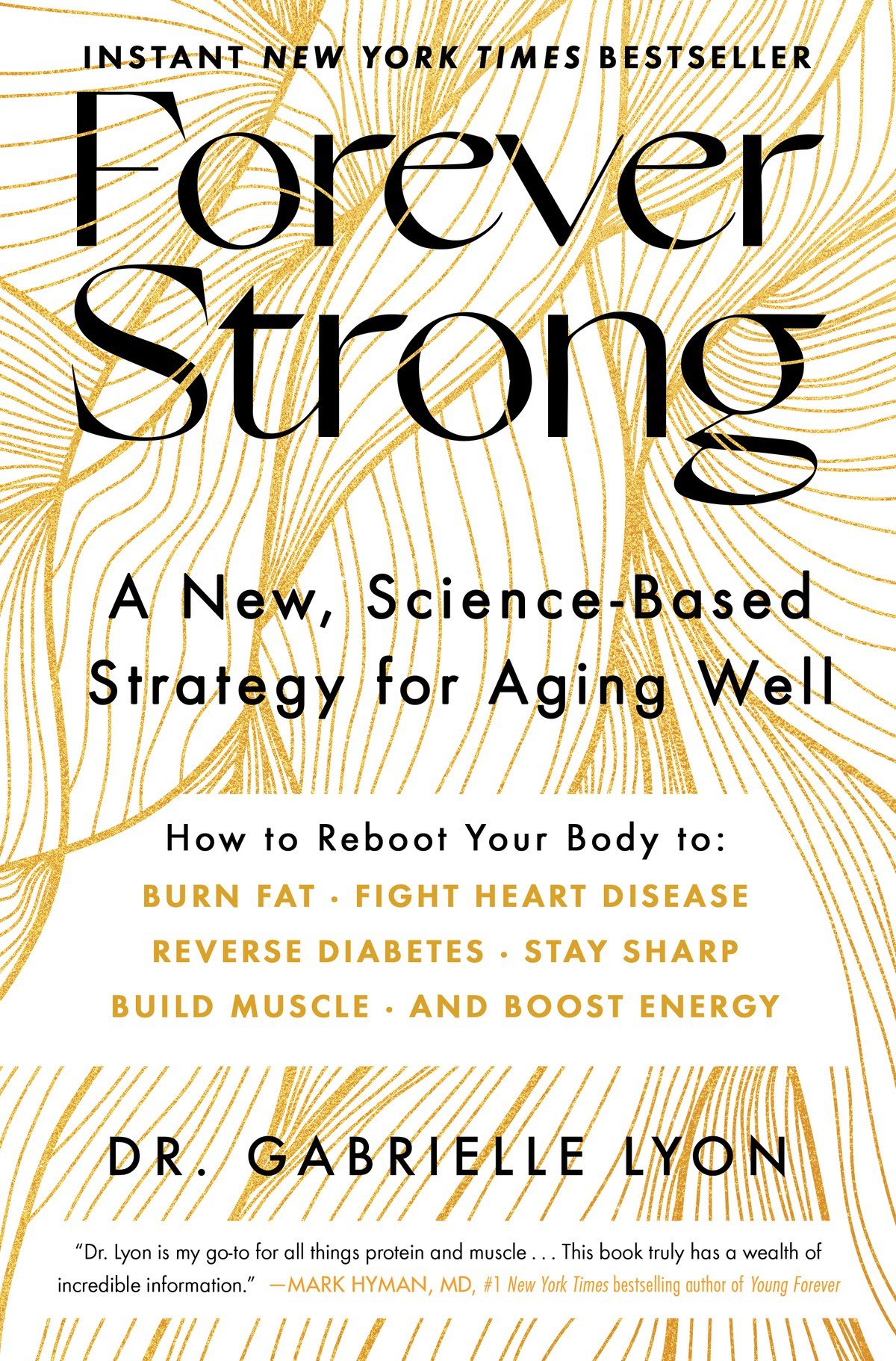
As a sports medicine physician I see patients of all ages, children to the elderly. But a common theme from most is the desire to age well. A common buzz word now is health span, which is defined as how many healthy years do we have. Of course that is what most of us are after right? We want many healthy years. This is different from the idea of lifespan which is simply years lived regardless of health status. Forever Strong by Dr. Gabrielle Lyon takes this concept of health span and aging well and gives insights in how to make that happen with the paradigm that muscle is our most important organ.
As a Doctor of Osteopathy and non‑surgical sports medicine physician, I spend my days thinking about activity, vitality and longevity. My love of sports and education in sports medicine has taught me that the same principles that keep athletes on the field such as resilience, progressive strength, smart recovery are exactly what help all of us stay independent and well later throughout life. Lyon's “muscle‑centric” message fits closely with how I counsel patients: muscle isn’t just about appearances, it is a metabolic and functional organ that protects your joints, your whole body and your long‑term health.
Dr. Lyon argues that many of the conditions we blame on age including slowing metabolism, stubborn weight, fatigue, increased risk of diabetes and cardiovascular disease are often signs that we are undermuscled, not just overfat. Skeletal muscle plays a central role in blood sugar control, inflammation, and physical resilience. The earlier we prioritize it, the better our odds of aging well. The older we get, the harder it is to build and sustain muscle which is why we must start as early as possible. This aligns with what I see clinically: those who maintain strength, move regularly, and fuel their bodies appropriately tend to have less disease, recover faster from injury and illness and maintain function longer.
One thing I appreciate about the book is that it goes beyond theory. Lyon lays out practical guidance on how to think, eat, move, and recover with muscle in mind, emphasizing protein‑forward nutrition and consistent resistance training in a way that can be scaled for busy schedules and different ages. She also spends time on mindset which is crucial for behavior change and supporting a healthy lifestyle. She empowers readers to shift from short‑term fixes to an identity grounded in strength and capability.
Forever Strong, resonates with me for several reasons. My early years participating in sports and even more so in my later years as I have learned more about health generally, I have had a growing appreciation of the value of how musculoskeletal health fits into overall health.
Muscle strength and endurance play a critical role in not only musculoskeletal health, but overall health. I cannot tell you the number of patients I see in my practice who are in their 50s trying to do what they did in their 20s and end up with an injury. It isn’t even that a 50 year old cannot do things they did in their 20s, although there are limits as we age, but if you are not training for those things do not be surprised if you cannot do them. Training our muscles helps to not only help us live longer, but improve and maintain function, which allow for a better quality of life.
Dr. Lyon also is a strong advocate of a protein rich diet. Protein helps support strong muscle and avoids the metabolic negatives associated with too many carbohydrates. I agree with her contention that many western diets are under supplied with protein. During my training we were taught males would benefit from roughly 1 gram of protein per kilogram of body weight, but now most agree more is better. For men, it is now widely recognized that 1 gram per pound of body weight is a better goal. For most this will mean targeting over 100 grams of protein a day which is a challenge. A realization that many will come to with these aspirational goals, is that it is very difficult to get this amount of complete proteins without animal sources. While our body can actually digest and absorb plenty of protein at one time, for muscle protein synthesis only about 0.2 grams per pound of body weight are available for this purpose. This means, that for optimal muscle health, we should try to spread out this 1 gram of protein per pound of body weight throughout the day.
How can we live a more muscle centric lifestyle? There are several take aways that I would pull from this book and the concept of muscle health and implement in your own life. First, acknowledge the vitally important role that muscle plays in a healthy lifespan. An acceptance of this fact, brings muscle health to the forefront of our minds and helps us to emphasize it. Next, we must exercise those muscles. Participating in responsible resistance training, helps to strengthen and maintain healthy muscle, tendons, joints and bones as we age. Avoiding reckless exercise helps to reduce injuries and maintain function for the long haul. Lastly, a diet emphasizing protein is one that promotes muscle and metabolic health. A great target for dietary protein should be 1 gram per pound of body weight which is an amount that will not happen by accident. To get this much protein in most peoples’ diets takes intention.
Hopefully this conversation helps you see your muscles not as an afterthought, but as a core part of your health plan. Do you agree with Dr. Lyon’s thoughts and my conclusions? If you haven’t read this book yet, grab a copy and let me know what you think.
If this sounds like you, you can see Dr. Quinn at Longstreet Clinic Sports Medicine.
Recommendations
NEWSLETTER
Subscribe to The Training Room newsletter.
Get monthly newsletter which includes article updates and practical sports medicine resources from Dr. Quinn.
Subscribed to The Training Room.Thank you — you are subscribed to The Training Room newsletter.
Share
Send this article to someone who would find it useful.